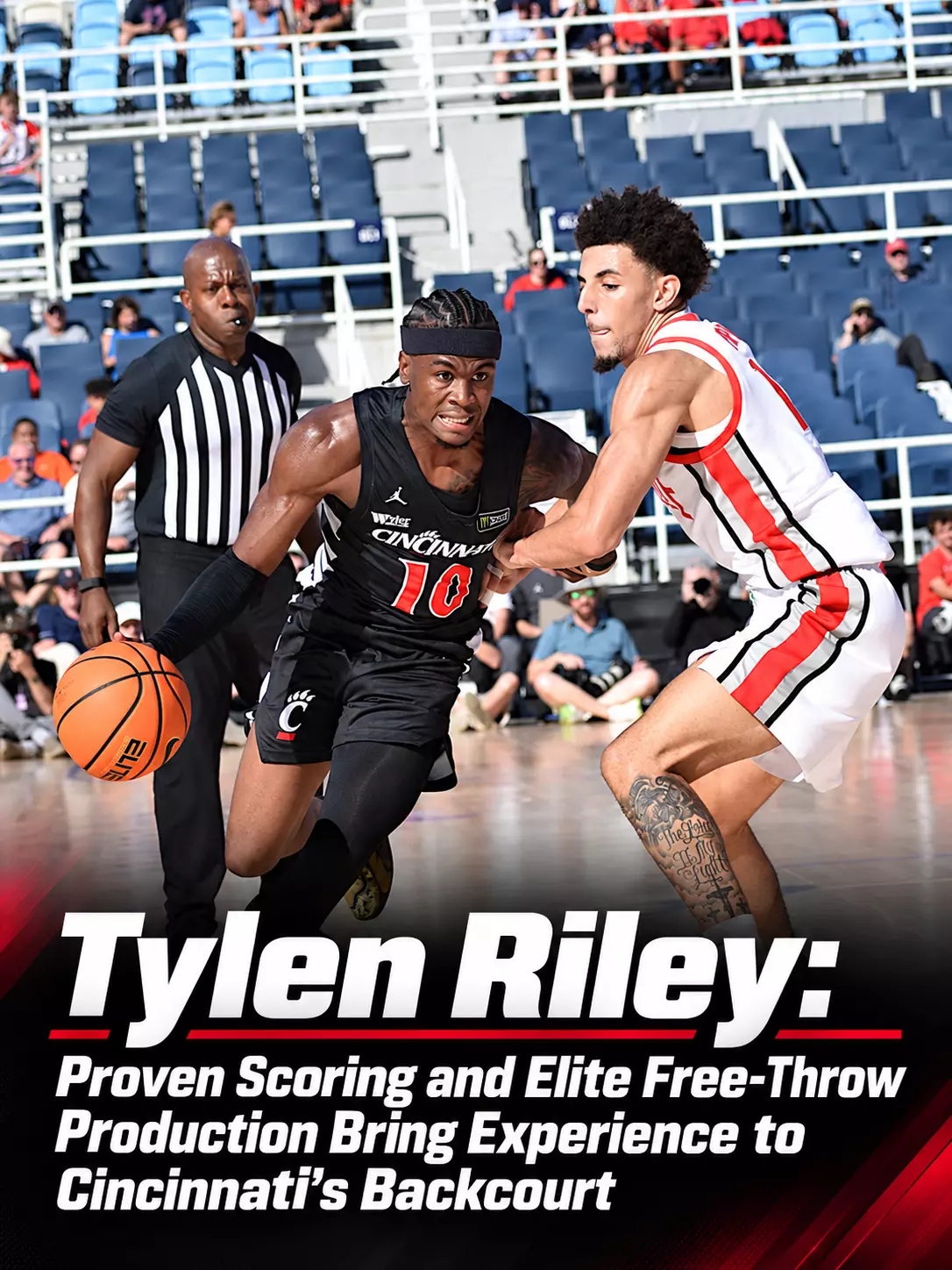
Tylen Riley: Proven Scoring and Elite Free-Throw Production Bring Experience to Cincinnati’s Backcourt
Tylen Riley: Proven Scoring and Elite Free-Throw Production Bring Experience to Cincinnati’s Backcourt
Position:
Guard
Height:
6-foot-3
Weight:
195 pounds
Class:
Senior
Hometown:
Las Vegas, Nevada
Birthplace:
Fort Wayne, Indiana
High School:
Durango
Current Team:
Cincinnati Bearcats
Previous Schools:
California Baptist and Tulsa
Jersey Number:
10
Season:
2026–27
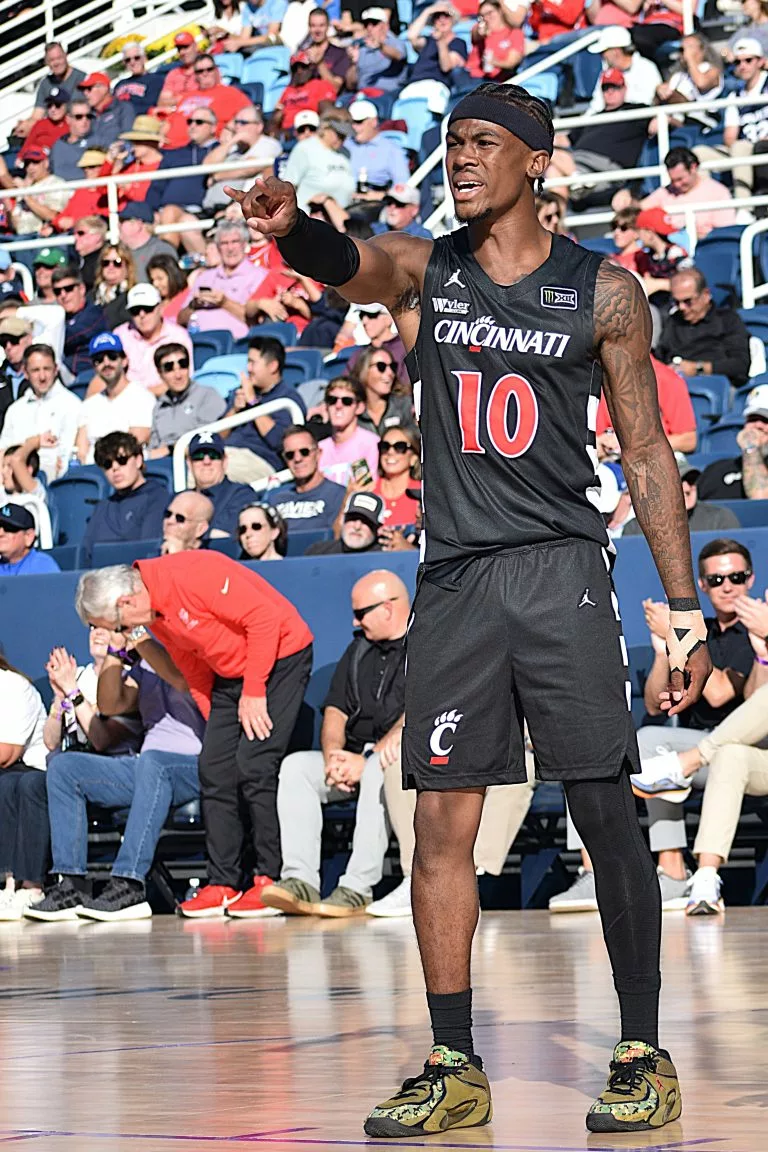
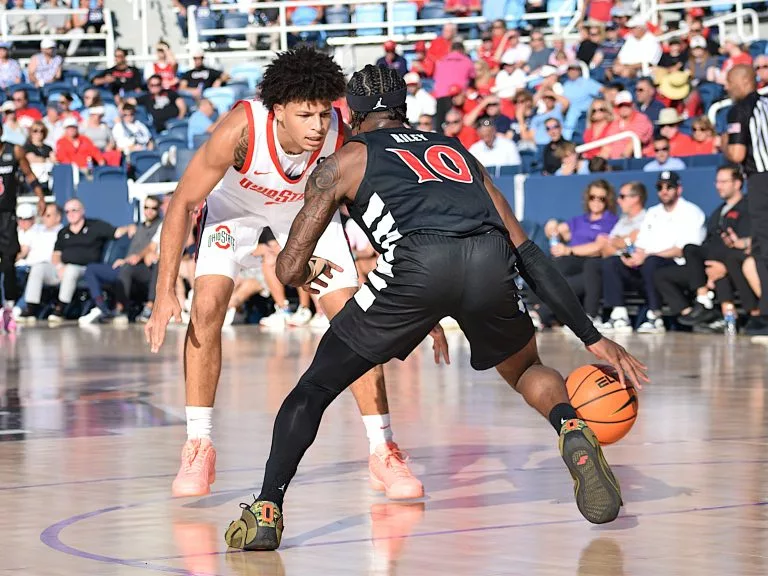
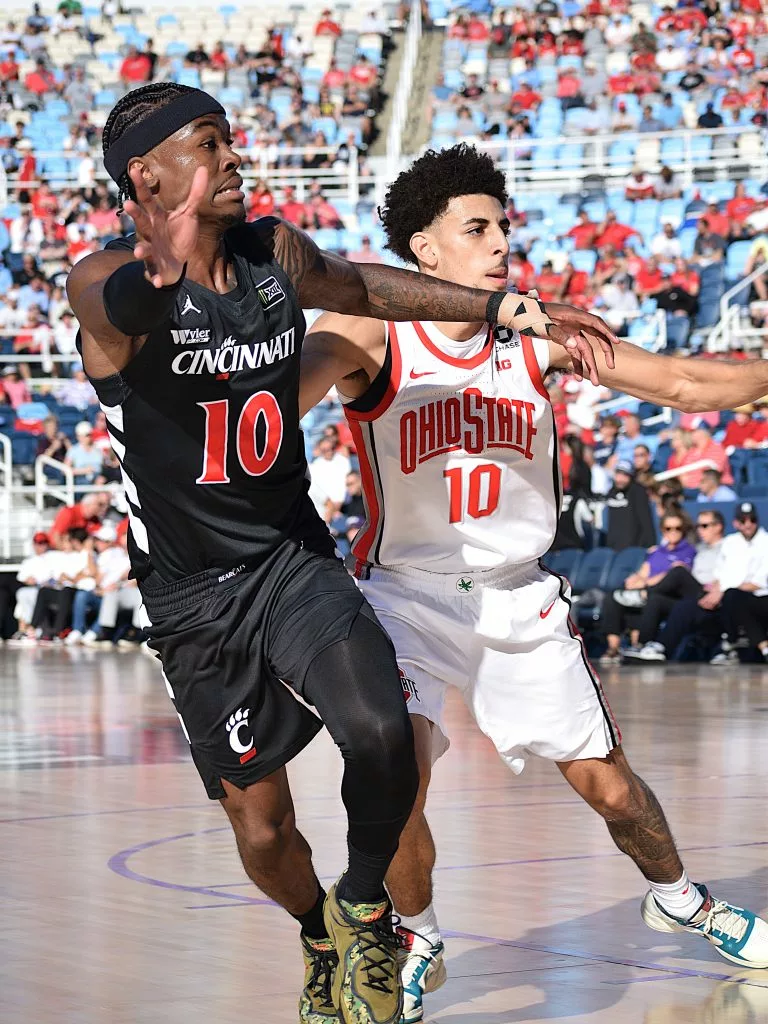
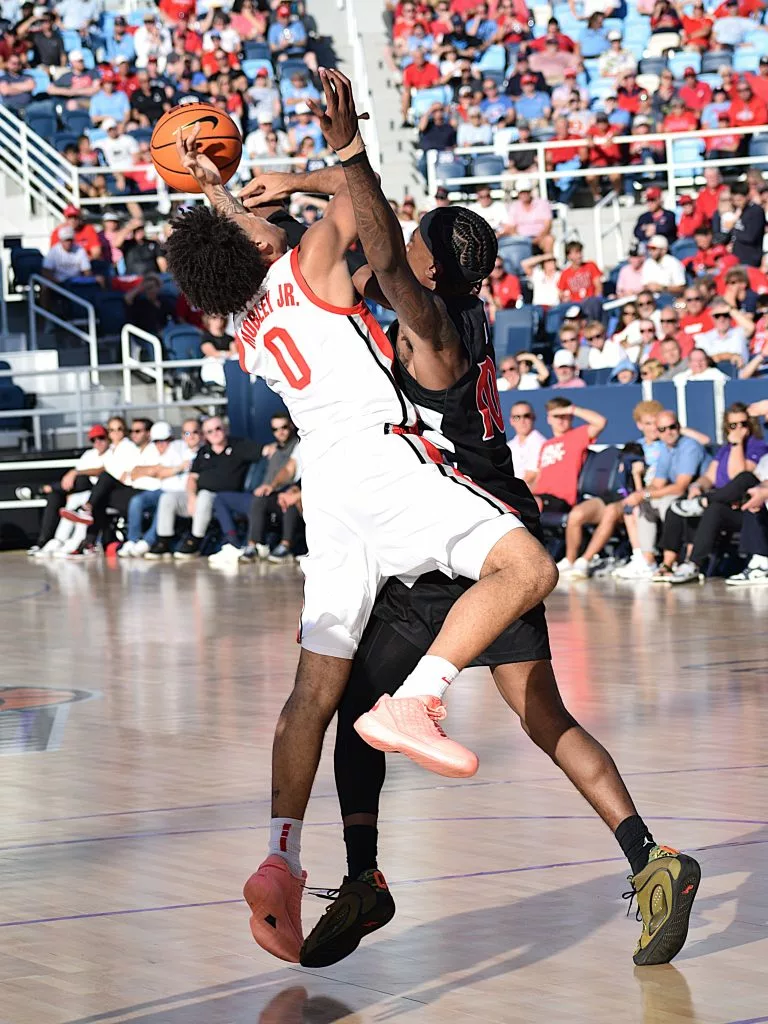
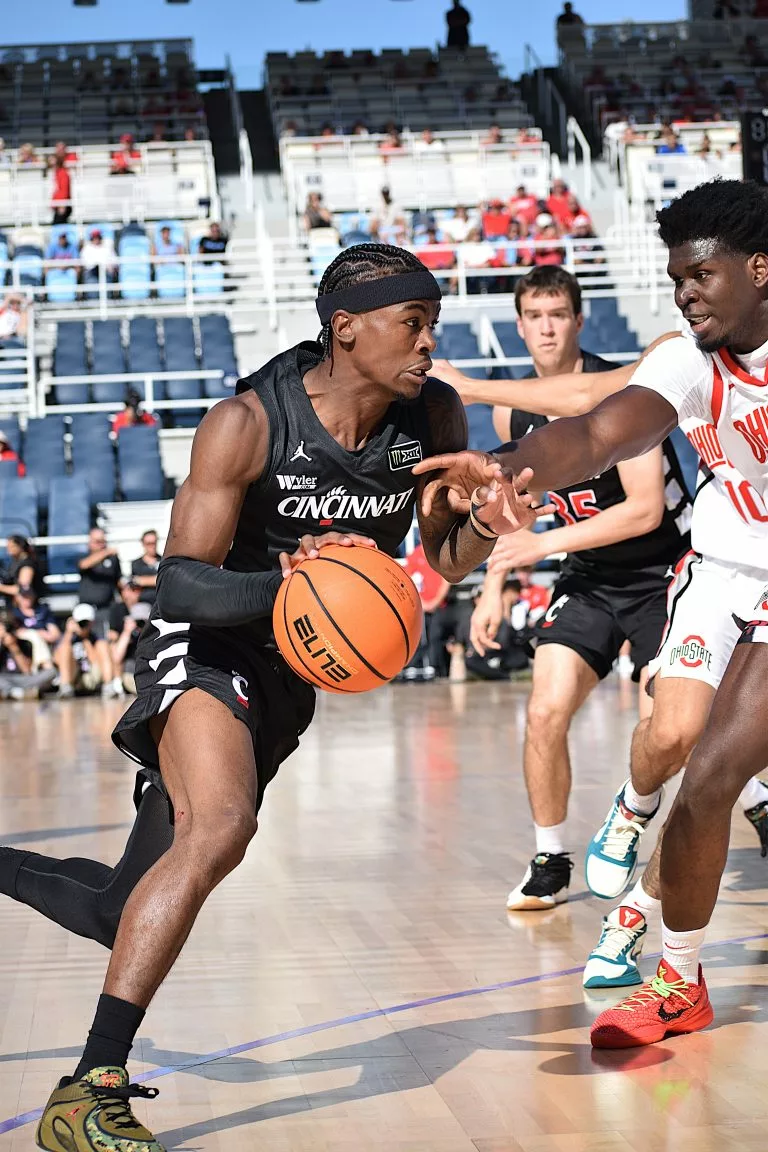
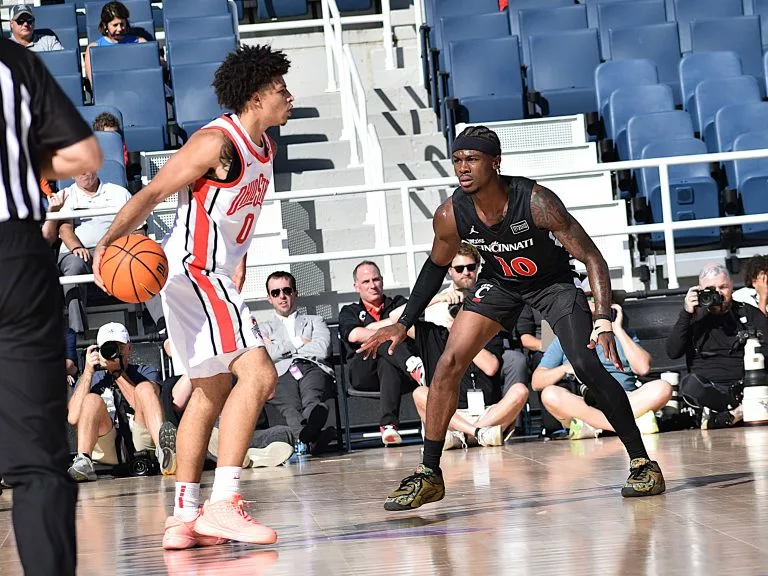
Tylen Riley arrives at Cincinnati after a breakthrough season that established him as a dependable scorer, productive playmaker, and exceptional free-throw shooter. Following two years of development at California Baptist, he stepped into a major role at Tulsa and helped the Golden Hurricane reach the NIT championship game.
Now, the senior guard brings the
Bearcats
experience handling significant offensive responsibility. His next challenge is translating that production to the Big 12 while helping Cincinnati build a reliable backcourt.
The Past: A Championship Foundation in Las Vegas
Born in Fort Wayne, Indiana, and raised in Las Vegas, Riley developed his game at Durango High School. He helped Durango win a state championship during his senior season and earned First Team All-Nevada recognition three times.
His high school résumé also included a No. 2 ranking in Nevada and a Gatorade Player of the Year nomination. Those accomplishments provided a foundation for college basketball, although his early years required patience as he worked toward a larger role.
Riley began his college career at California Baptist in 2023–24. He appeared in 27 games, made four starts, and averaged 2.5 points and 1.4 rebounds.
His collegiate debut offered an encouraging introduction: 12 points and six rebounds against San Francisco. He also scored 10 points at New Mexico State later that season.
As a sophomore, Riley increased his production to 7.5 points, 2.6 rebounds, and 2.0 assists in 19.2 minutes per game. He played in 24 games and made nine starts, averaging more than 13 points when included in the starting lineup.
He scored in double figures nine times and exceeded 20 points twice, highlighted by a then-career-high 25 against Grand Canyon. His 82.1 percent free-throw shooting also foreshadowed a skill that would become central to his success at Tulsa.
His Tulsa Breakthrough: From Developing Guard to Offensive Leader
Riley’s junior season at Tulsa marked a substantial leap.
He started all 38 games in 2025–26, averaging 15.0 points to finish second on the team while leading the Golden Hurricane with 4.4 assists per game. He earned Second Team All-American Conference and American Conference All-Newcomer Team honors.
His consistency was notable. Riley scored in double figures 31 times, reached 20 points in eight games, and recorded at least three assists in 33 appearances. He led Tulsa in scoring 12 times.
Several performances illustrated his increased offensive influence. He scored 29 points against New Mexico State while making all 13 free-throw attempts and earned American Conference Player of the Week recognition in Week 6. Against Wichita State, he set a career high with 30 points and added four assists.
Riley continued producing in postseason competition. He scored 26 points in an American Conference Tournament quarterfinal victory over North Texas, making all 17 free-throw attempts. That established Tulsa’s record for the most free throws made without a miss in a game and the American Conference Tournament record for made free throws in a game.
During the NIT, he contributed 21 points, six assists, and six rebounds against Wichita State in the quarterfinals. He later scored 20 points against Auburn in the championship game and earned NIT All-Tournament Team recognition.
The Present: An Experienced Offensive Option for Cincinnati
Riley joins
Cincinnati
with evidence that he can manage a substantial workload across an entire season.
Starting all 38 games at Tulsa gave him experience preparing for opponents as a central part of the offense. His scoring and assist production also suggest the flexibility to help as both a creator and a finisher.
For the
Bearcats, that combination could prove useful in possessions that require a guard to make decisions under pressure. Riley can bring experience creating scoring opportunities while recognizing chances to involve teammates.
His exact responsibilities will depend on
Cincinnati’s rotation and how its guards work together. The transition to Big 12 competition will test his efficiency against new defensive schemes and matchups, but his Tulsa season provides a strong starting point.
His Strengths: Free Throws, Consistency, and Playmaking
Riley’s most distinctive statistical strength is his ability to generate points at the free-throw line.
He made 203 free throws at Tulsa, leading the American Conference and finishing 11th nationally. His 87.1 percent accuracy ranked second in the conference.
That combination of volume and efficiency matters. Riley repeatedly reached the line and converted those opportunities at a high rate, giving his team a scoring source that could remain productive even when field-goal attempts were not falling.
His perfect performances against New Mexico State and North Texas demonstrated that ability across unusually large numbers of attempts. The 17-for-17 outing in the conference tournament was particularly valuable because it helped secure a postseason victory.
Consistency is another established strength. Scoring in double figures in 31 games indicates that his offensive value extended well beyond his highest-scoring nights.
His passing adds another dimension. Leading Tulsa with 4.4 assists per game and recording three or more assists in 33 games shows sustained involvement in creating offense for others. His turnover figures were not included in the supplied biography, so those assist totals alone do not establish his overall ball security.
Personal Goals and Future: Carrying His Production Into the Big 12
Riley’s supplied biography does not identify specific personal goals. His career progression nevertheless points toward a clear opportunity: prove that his scoring and playmaking can remain effective against Big 12 competition.
Maintaining his ability to earn free throws would be an important part of that transition. Opponents will have reason to focus on limiting the situations that allow him to draw contact, making his decisions against help defense especially important.
Continued growth as a distributor could help him respond. Finding an open teammate when a scoring lane closes would allow him to keep possessions productive without forcing attempts.
Defensive reliability will also influence his role. Consistent positioning, communication, and execution could make him easier to trust in close games, where his free-throw shooting offers an obvious offensive benefit.
Beyond college, a productive senior season could strengthen Riley’s professional prospects. His improvement across three college seasons is encouraging, but any specific destination would depend on his performance and subsequent evaluations.
Team Goals: Providing Stability in Cincinnati’s Backcourt
Cincinnati
could benefit from Riley’s experience balancing individual scoring with responsibility for the offense.
His potential partnership with a developing guard such as Elijah Perryman offers different options for handling the ball and creating shots. How those combinations work will depend on spacing, defense, and the responsibilities assigned to each player.
Riley’s postseason experience could also help him navigate the demands of meaningful late-season games. His production during Tulsa’s NIT run gives him recent experience contributing through an extended tournament schedule.
Competing successfully in the Big 12 and pursuing an NCAA Tournament berth are reasonable benchmarks for Cincinnati, rather than documented team declarations in the supplied biography. Riley can support that pursuit through dependable offense, sound decisions, and consistent defensive effort.
Conclusion
Tylen Riley’s college career has followed a clear upward trajectory. He progressed from limited freshman minutes at California Baptist to a starting role at Tulsa, where he became an all-conference guard and a productive postseason performer.
Cincinnati now offers an opportunity to build on that growth. If Riley carries his free-throw efficiency, scoring consistency, and playmaking into Big 12 competition, he could become an important source of stability for the
Bearcats’ backcourt.
New Users – Get $350 in Bonus Bets when you wager $5 for 7 days
T&Cs apply
4.6/5
Gambling Problem? Call 1-800-GAMBLER or 1-800-MY-RESET. Call 1-888-789-7777 or visit ccpgg.org/chat (CT). Hope is here. GamblingHelpLineMA.org or call (800) 327-5050 for 24/7 support (MA). Visit www.mdgamblinghelp.org (MD). Call 1-877-8HOPE-NY or text HOPENY (NY). 21+ (18+ DC, WY) and present in select states (for KS, in affiliation with Kansas Star Casino). Find online real money wagering only. Min $5 wager required for 7 consecutive days. $5 free play credit. Bonus issued as non-withdrawable bonus with cash withdrawable bonus with cash withdrawable. Bonus bets which expire 7 days after receipt. Restrictions apply. See terms at sportsbook.fanduel.com. Call 1-877-770-7867 (LA).
Up To $1500 in Bonus Bets Paid Back if your First Bet Does Not Win
T&Cs apply
4.5/5
Gambling problem? Call 1-800-GAMBLER or 1-800-MY-RESET (Available in the US) 877-8-HOPENY or text HOPENY (467369) (NY) 1-800-327-5050 (MA), 1-800-BETS-OFF (IA), 1-800-981-0023 (PR). 21+ only. Please Gamble Responsibly. See BetMGM.com for Terms. First Bet Offer for new customers only (if applicable). Subject to eligibility requirements. Bonus bets are non-withdrawable. In partnership with Kansas Crossing Casino and Hotel. Promotional offers not available in Mississippi, Massachusetts, New York, Ontario, or Puerto Rico.
New DraftKings Customers: Bet $5, Get $200 + 3 Months of NBA League Pass!
T&Cs apply
4.5/5
GAMBLING PROBLEM? CALL 1-800-GAMBLER or 1-800-MY-RESET, (800) 327-5050 or visit gamblinghelplinema.org (MA). Please Gamble Responsibly. 888-789-7777/visit ccpg.org (CT), or visit www.mdgamblinghelp.org (MD), 1-800-981-0023 (PR). 21+ and present in most states. (18+ DC/NH/PR/WY). Void in CAN. Eligibility restrictions apply. On behalf of Boot Hill Casino (KS). Pass-thru of per wager tax may apply in IL. 1 per new Sportsbook customer. $5+ first-time bet req. Max. $200 issued as non-withdrawable Bonus Bets. Stake removed from payout. Reward issued as $50 in Bonus Bets every 7 days via click-to-claim for 21 days. Bonus Bets and click-to-claims expire 7 days (168hrs) after issuance. Terms: dkng.co/offer. Get 1 promo code to redeem a 3-month NBA League Pass subscription, complimentary of DraftKings. Subscription auto-renews monthly at then-current price (currently $16.99/mo); cancel anytime. Terms, restrictions, and eligibility requirements apply. Redeem League Pass by 12/19/26 at 11:59 PM ET. Addt’l terms: support.watch.nba.com/hc/en-us/articles/9165532876183-League-Pass-Terms-of-Use_. Ends 11/29/26 at 11:59 PM ET. Sponsored by DK.
Must be 21+. GAMBLING PROBLEM? CALL 1-800-GAMBLER OR CALL 1-800-MY-RESET, www.mdgamblinghelp.org (MD), (800)-327-5050 or gamblinghelplinema.org (MA), Call (877)8-HOPENY or text HOPENY (467369) (NY), (888) 789-7777 or ccpg.org (CT), morethanagame.nc.gov (NC), 1800gambler.net (WV)
Bet $1 and get double the winnings up to $25 for your next 10 bets
T&Cs apply
4.4/5
21+ New users only. Must register using eligible promo code. First bet after registration must qualify. Max. Bonus Bet: $1,000. Bonus Bet expires 14 days after receipt. Void where prohibited. See Caesars.com/promos for full terms. Gambling Problem? 1-800-GAMBLER (1-800-426-2537)
21+ and present in OH. Gambling Problem? Call 1-800-GAMBLER.
This site is using
Cloudflare
and adheres to the
Google Safe Browsing Program. We adapted
Google's Privacy Guidelines
to keep your data safe at all times.
Close
Ready to Win Big? Join the Elite with Our Sports Betting Deals!
FanDuel Promo
New Users – Get $350 in Bonus Bets when you wager $5 for 7 days
Our Favorite
T&Cs and 21+ apply
Gambling Problem? Call 1-800-GAMBLER or 1-800-MY-RESET. Call 1-888-789-7777 or visit ccpgg.org/chat (CT). Hope is here. GamblingHelpLineMA.org or call (800) 327-5050 for 24/7 support (MA). Visit www.mdgamblinghelp.org (MD). Call 1-877-8HOPE-NY or text HOPENY (NY). 21+ (18+ DC, WY) and present in select states (for KS, in affiliation with Kansas Star Casino). Find online real money wagering only. Min $5 wager required for 7 consecutive days. $5 free play credit. Bonus issued as non-withdrawable bonus with cash withdrawable bonus with cash withdrawable. Bonus bets which expire 7 days after receipt. Restrictions apply. See terms at sportsbook.fanduel.com. Call 1-877-770-7867 (LA).
Code:
Open FanDuel
Get Bonus
BetMGM Promo
Up To $1500 in Bonus Bets Paid Back if your First Bet Does Not Win
Best Slots
T&Cs and 21+ apply
Gambling problem? Call 1-800-GAMBLER or 1-800-MY-RESET (Available in the US) 877-8-HOPENY or text HOPENY (467369) (NY) 1-800-327-5050 (MA), 1-800-BETS-OFF (IA), 1-800-981-0023 (PR). 21+ only. Please Gamble Responsibly. See BetMGM.com for Terms. First Bet Offer for new customers only (if applicable). Subject to eligibility requirements. Bonus bets are non-withdrawable. In partnership with Kansas Crossing Casino and Hotel. Promotional offers not available in Mississippi, Massachusetts, New York, Ontario, or Puerto Rico.
Code:
Open BetMGM
Get Bonus
DraftKings Promo
New DraftKings Customers: Bet $5, Get $200 + 3 Months of NBA League Pass!
Newcomer
T&Cs and 21+ apply
GAMBLING PROBLEM? CALL 1-800-GAMBLER or 1-800-MY-RESET, (800) 327-5050 or visit gamblinghelplinema.org (MA). Please Gamble Responsibly. 888-789-7777/visit ccpg.org (CT), or visit www.mdgamblinghelp.org (MD), 1-800-981-0023 (PR). 21+ and present in most states. (18+ DC/NH/PR/WY). Void in CAN. Eligibility restrictions apply. On behalf of Boot Hill Casino (KS). Pass-thru of per wager tax may apply in IL. 1 per new Sportsbook customer. $5+ first-time bet req. Max. $200 issued as non-withdrawable Bonus Bets. Stake removed from payout. Reward issued as $50 in Bonus Bets every 7 days via click-to-claim for 21 days. Bonus Bets and click-to-claims expire 7 days (168hrs) after issuance. Terms: dkng.co/offer. Get 1 promo code to redeem a 3-month NBA League Pass subscription, complimentary of DraftKings. Subscription auto-renews monthly at then-current price (currently $16.99/mo); cancel anytime. Terms, restrictions, and eligibility requirements apply. Redeem League Pass by 12/19/26 at 11:59 PM ET. Addt’l terms: support.watch.nba.com/hc/en-us/articles/9165532876183-League-Pass-Terms-of-Use_. Ends 11/29/26 at 11:59 PM ET. Sponsored by DK.
Code:
Open DraftKings
Get Bonus
Find out what the legends have to say about sports this week....
New Users – Get $350 in Bonus Bets when you wager $5 for 7 days
Gambling Problem? Call 1-800-GAMBLER or 1-800-MY-RESET. Call 1-888-789-7777 or visit ccpgg.org/chat (CT). Hope is here. GamblingHelpLineMA.org or call (800) 327-5050 for 24/7 support (MA). Visit www.mdgamblinghelp.org (MD). Call 1-877-8HOPE-NY or text HOPENY (NY). 21+ (18+ DC, WY) and present in select states (for KS, in affiliation with Kansas Star Casino). Find online real money wagering only. Min $5 wager required for 7 consecutive days. $5 free play credit. Bonus issued as non-withdrawable bonus with cash withdrawable bonus with cash withdrawable. Bonus bets which expire 7 days after receipt. Restrictions apply. See terms at sportsbook.fanduel.com. Call 1-877-770-7867 (LA).