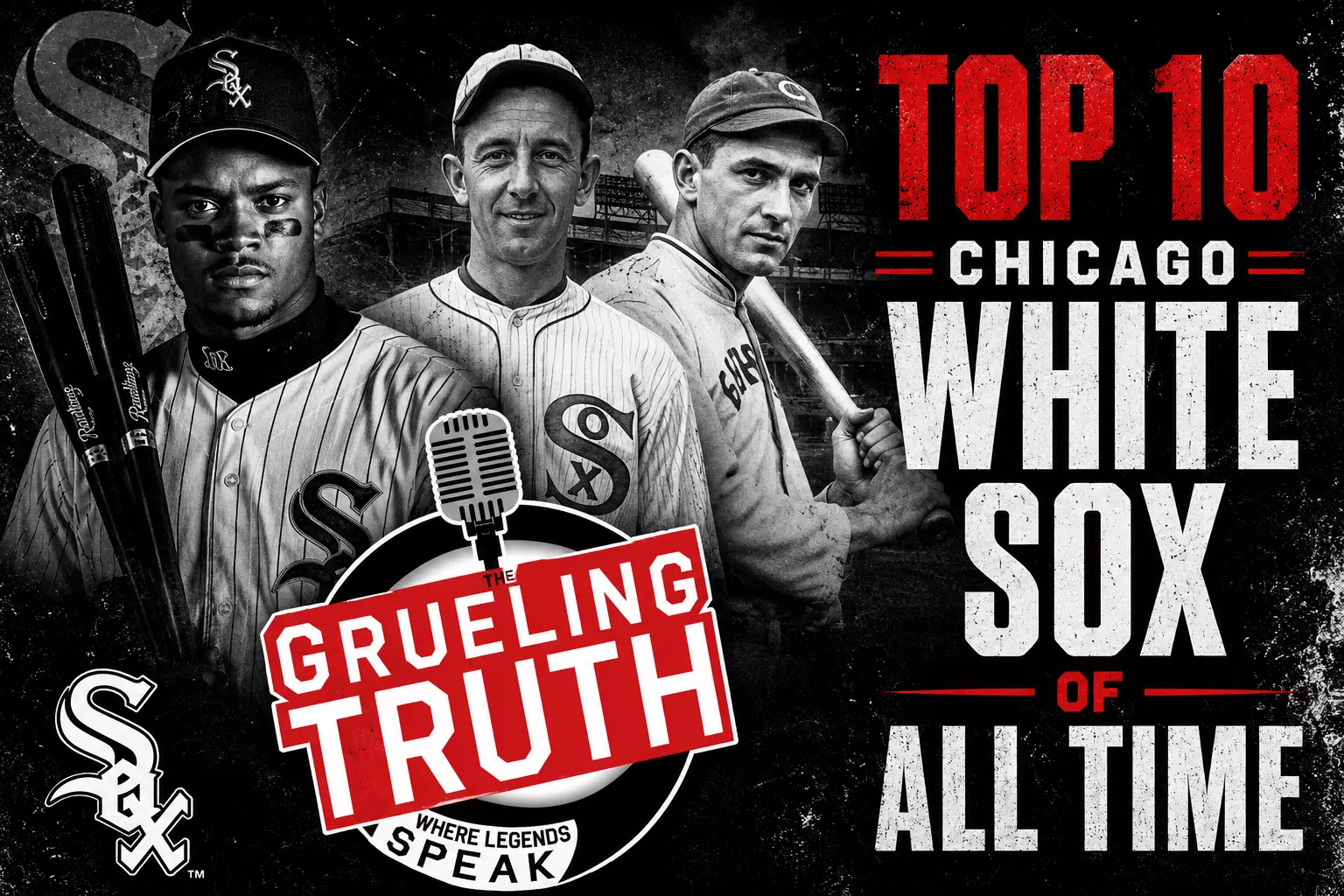
The Chicago White Sox don’t always get the national shine—but make no mistake, this franchise has produced some of the toughest, smartest, and most complete players in baseball history.
The Chicago White Sox don’t always get the national shine—but make no mistake, this franchise has produced some of the toughest, smartest, and most complete players in baseball history. This list isn’t about flash. It’s about production, longevity, and what these players meant to the South Side.
To make this list, you had to do two things:
be retired
and
build a significant part of your legacy in a White Sox uniform.
This is about impact—not just talent.
10) Wilbur Wood
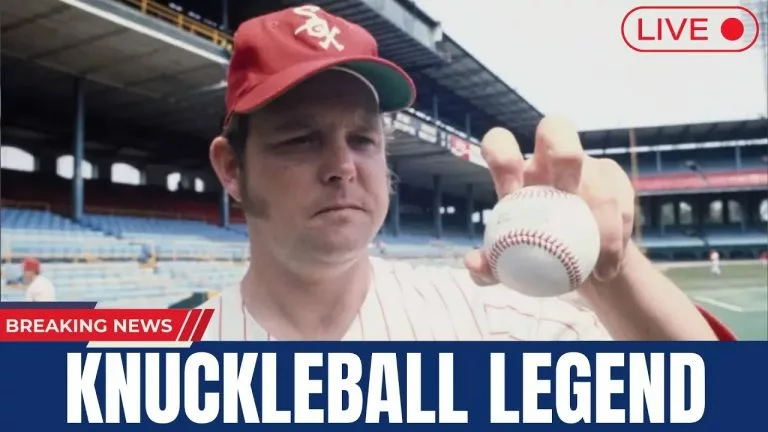
Wilbur Wood wasn’t just a pitcher—he was a workhorse from a different era, the kind of arm modern baseball simply doesn’t produce anymore. In the early 1970s, Wood carried a workload that would be unthinkable today, averaging an astonishing 45 starts and over 330 innings per season during his peak years. That’s not durability—that’s dominance through endurance.
Wood’s knuckleball made him unique, but it was his reliability that defined him. From 1971 through 1974, he won 20 or more games every season, including back-to-back 24-win campaigns in 1972 and 1973, leading the
American League
both years. He wasn’t overpowering in the traditional sense—he didn’t need to be. He controlled the game with movement, deception, and rhythm.
In an era where teams leaned heavily on their ace, Wood didn’t just answer the call—he demanded the ball. He was the rotation, plain and simple. Without Wood, the White Sox of that era aren’t competitive. That’s the level of value he brought.
Wilbur Wood Dead at 84 | Knuckleball Legend Remembered ⚾🔴 LIVE BREAKING NEWS
9) Harold Baines
Harold Baines represents consistency, professionalism, and quiet excellence—everything you want in a cornerstone player. Over 14 seasons with the White Sox, Baines didn’t just produce—he anchored the lineup with steady, dependable offense year after year.
Batting .288 with 221 home runs and 981 RBIs during his time on the South Side, Baines wasn’t flashy—but he was effective. He delivered in big moments and provided a calming presence in the clubhouse. That matters more than people realize, especially for a franchise that often dealt with inconsistency around him.
His role in the 1983 playoff team shouldn’t be overlooked. That group helped reestablish the White Sox as a legitimate contender, and Baines was right in the middle of it. He wasn’t the loudest voice, but he was one of the most respected.
Baines built a career on doing things the right way—and doing them consistently.
“Uncommon Beginnings, Extraordinary Endings : The Amazing Career of Harold Baines”
8) Minnie Miñoso
Minnie Miñoso wasn’t just a great player—he was a pioneer who helped shape the identity of the Chicago White Sox. His impact goes beyond numbers, but even the numbers demand respect.
Miñoso was a seven-time All-Star in the American League and brought a dynamic, aggressive style of play that energized the South Side. He hit over .300 eight times and consistently found ways to impact games—whether it was with his bat, his speed, or his defensive presence.
Leading the league multiple times in triples and stolen bases, Miñoso was ahead of his time in terms of athletic versatility. He wasn’t just playing the game—he was forcing it to adapt to him.
Defensively, he added three Gold Gloves later in his career, proving his longevity and commitment to the craft. Off the field, his role as one of the first Black stars in Chicago baseball cemented his legacy as a transformative figure.
Miñoso wasn’t just important—he was foundational.
The Legacy of Minnie Miñoso (2022)
7) Nellie Fox
Nellie Fox defined the “Go-Go” White Sox—contact hitting, defensive precision, and relentless execution. In an era dominated by power, Fox proved you could control games with discipline and consistency.
A 12-time All-Star and 1959 American League MVP, Fox was the engine behind the White Sox team that captured the AL pennant. That season, he hit .306, delivered 70 RBIs, and set the tone for an offense built on movement and pressure rather than brute force.
Fox’s numbers don’t jump off the page in today’s game—35 career home runs—but that misses the point entirely. He led the league in singles eight times, including seven consecutive seasons. That’s not luck—that’s mastery of bat control.
Defensively, his .984 fielding percentage and six seasons leading the league in fielding average highlight just how reliable he was.
Fox didn’t overpower opponents—he outplayed them.
Nellie Fox (1960) Interview by Cliff Evans
6) Luke Appling
Luke Appling is the definition of longevity and elite consistency. Spending all 22 seasons of his Hall of Fame career with the White Sox, Appling wasn’t just good—he was elite for an extended period of time that few players in baseball history can match.
Fifteen seasons hitting .300 or better tells you everything about his approach. He wasn’t chasing power—he was controlling at-bats. Appling had one of the most disciplined hitting styles ever seen, routinely frustrating pitchers and forcing mistakes.
Winning a batting title at age 36 speaks volumes about his adaptability and baseball intelligence. Most players decline—Appling refined.
Defensively, he held his own at shortstop during a physically demanding era, and his leadership provided stability for decades.
You don’t play 22 years with one franchise by accident. You do it by producing, adjusting, and leading.
Appling did all three.
Luke Appling’s AMAZING MLB Hall of Fame Career Highlights!
5) Shoeless Joe Jackson
Shoeless Joe Jackson
remains one of the most complicated—and talented—players in baseball history. Strip away the controversy, and you’re left with one of the greatest pure hitters the game has ever seen.
A career .356 hitter—third-highest in MLB history—Jackson was a machine at the plate. During his time with the White Sox, he hit .340, producing at a level that demanded attention even in the dead-ball era.
Babe Ruth once called him the greatest hitter he ever saw. That’s not casual praise—that’s recognition from the best.
Jackson’s role in the 1919 Black Sox scandal will always be part of his legacy, but the reality is his on-field performance during that series remains debated. What isn’t debated is his ability.
If Jackson had a longer, uninterrupted career in Chicago, there’s a strong argument he could sit even higher on this list.
Talent like that doesn’t come around often.
Shoeless Joe Jackson: Hall of Fame Worthy?
4) Ed Walsh
Ed Walsh’s numbers don’t just stand out—they look impossible in today’s game.
A career ERA of 1.81. Read that again.
Walsh dominated an era with efficiency, durability, and control. Over 13 seasons with the White Sox, he racked up 1,732 strikeouts, threw 57 shutouts, and maintained a WHIP under 1.00. That’s not just great—it’s historically unmatched.
His 40-win season in 1908 is something modern baseball will likely never see again. The game has changed too much. But in Walsh’s time, he wasn’t just winning—he was carrying his team.
He pitched with a spitball, yes—but so did others. Nobody did it better.
Walsh wasn’t just an ace—he was the standard for what dominance looked like in early baseball history.
Ed Walsh Signed Signed Baseball! The Greatest Pitcher of All-Time!
3) Luis Aparicio
Luis Aparicio brought speed, defense, and energy back to the forefront of baseball—and the White Sox benefited more than anyone.
Winning Rookie of the Year in 1956, Aparicio immediately became one of the most impactful players in the league. He led the American League in stolen bases nine straight seasons, redefining what pressure on the basepaths looked like.
But he wasn’t just fast—he was elite defensively.
Nine Gold Gloves at shortstop, leading the league in assists, putouts, and fielding percentage—Aparicio didn’t just play defense, he controlled it.
He was instrumental in the 1959 AL championship team, finishing as the MVP runner-up. That season wasn’t just about numbers—it was about leadership and presence.
Aparicio forced teams to adjust every time he got on base.
That kind of player changes games.
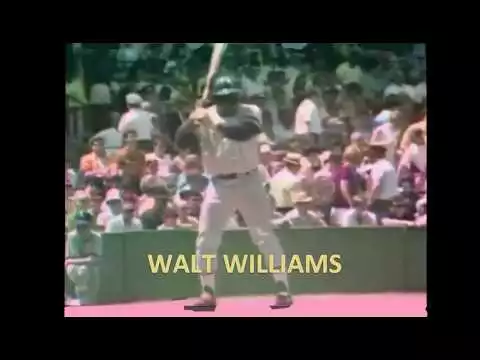
5/31/1970 White Sox at Red Sox highlights Chicago wins, 22-13 Williams, Aparicio five hits each
2) Frank Thomas
Frank Thomas is the most dominant offensive player in White Sox history—period.
“The Big Hurt” didn’t just produce—he overwhelmed pitchers. A career .307 hitter with 448 home runs and 1,465 RBIs for the White Sox, Thomas was the centerpiece of the franchise for over a decade.
His first eight seasons alone included two MVP awards and numbers that could have easily earned him more. Plate discipline, power, and consistency—Thomas had all three at elite levels.
What made him special was his approach. He didn’t chase. He didn’t guess. He waited, punished mistakes, and forced pitchers into uncomfortable situations.
Even in an era filled with power hitters, Thomas stood out because of how complete his offensive game was.
He wasn’t just great—he was inevitable.
Frank Thomas (The Big Hurt) Highlight Reel
1) Eddie Collins
Eddie Collins is the
greatest Chicago White Sox
player of all time—and it’s not based on hype. It’s based on impact.
Over 12 seasons with the White Sox, Collins hit .331 and stole 368 bases, combining elite contact hitting with aggressive base running. But numbers only tell part of the story.
Collins was the heartbeat of the team.
He brought energy, intelligence, and leadership every single day. He wasn’t just playing—he was dictating how the game was played. His ability to control tempo, get on base, and create scoring opportunities made him invaluable.
Collins didn’t take plays off. He ran everywhere. He pressured defenses constantly. And he elevated the players around him.
Up To $1500 in Bonus Bets Paid Back if your First Bet Does Not Win
T&Cs apply
4.5/5
Gambling problem? Call 1-800-GAMBLER or 1-800-MY-RESET (Available in the US) 877-8-HOPENY or text HOPENY (467369) (NY) 1-800-327-5050 (MA), 1-800-BETS-OFF (IA), 1-800-981-0023 (PR). 21+ only. Please Gamble Responsibly. See BetMGM.com for Terms. First Bet Offer for new customers only (if applicable). Subject to eligibility requirements. Bonus bets are non-withdrawable. In partnership with Kansas Crossing Casino and Hotel. Promotional offers not available in Mississippi, Massachusetts, New York, Ontario, or Puerto Rico.
New DraftKings Customers: Spend $5+ Get $150 in Bonuses
T&Cs apply
4.5/5
GAMBLING PROBLEM? CALL 1-800-GAMBLER or 1-800-MY-RESET, (800) 327-5050 or visit gamblinghelplinema.org (MA). Please Gamble Responsibly. 888-789-7777/visit ccpg.org (CT), or visit www.mdgamblinghelp.org (MD), 1-800-981-0023 (PR). 21+ and present in most states. (18+ DC/NH/PR/WY). Void in CAN. Eligibility restrictions apply. On behalf of Boot Hill Casino (KS). Pass-thru of per wager tax may apply in IL. 1 per new DraftKings customer. $5+ first-time bet req. Max. $150 issued as non-withdrawable Bonus Bets. Stake removed from payout. Reward issued as $50 in Bonus Bets every 7 days via click-to-claim for 14 days. Bonus Bets and click-to-claims expire 7 days (168hrs) after issuance. Terms: sportsbook.draftkings.com/promos. Ends 10/11/26 at 11:59 PM ET. Sponsored by DK.
Must be 21+. GAMBLING PROBLEM? CALL 1-800-GAMBLER OR CALL 1-800-MY-RESET, www.mdgamblinghelp.org (MD), (800)-327-5050 or gamblinghelplinema.org (MA), Call (877)8-HOPENY or text HOPENY (467369) (NY), (888) 789-7777 or ccpg.org (CT), morethanagame.nc.gov (NC), 1800gambler.net (WV)
Bet $1 and get double the winnings up to $25 for your next 10 bets
T&Cs apply
4.4/5
21+ New users only. Must register using eligible promo code. First bet after registration must qualify. Max. Bonus Bet: $1,000. Bonus Bet expires 14 days after receipt. Void where prohibited. See Caesars.com/promos for full terms. Gambling Problem? 1-800-GAMBLER (1-800-426-2537)
21+ and present in OH. Gambling Problem? Call 1-800-GAMBLER.
This site is using
Cloudflare
and adheres to the
Google Safe Browsing Program. We adapted
Google's Privacy Guidelines
to keep your data safe at all times.
Close
Ready to Win Big? Join the Elite with Our Sports Betting Deals!
FanDuel Promo
New Users – Get $250 in Bonus Bets when you wager $5 for 5 days
Up To $1500 in Bonus Bets Paid Back if your First Bet Does Not Win
Best Slots
T&Cs and 21+ apply
Gambling problem? Call 1-800-GAMBLER or 1-800-MY-RESET (Available in the US) 877-8-HOPENY or text HOPENY (467369) (NY) 1-800-327-5050 (MA), 1-800-BETS-OFF (IA), 1-800-981-0023 (PR). 21+ only. Please Gamble Responsibly. See BetMGM.com for Terms. First Bet Offer for new customers only (if applicable). Subject to eligibility requirements. Bonus bets are non-withdrawable. In partnership with Kansas Crossing Casino and Hotel. Promotional offers not available in Mississippi, Massachusetts, New York, Ontario, or Puerto Rico.
Code:
Open BetMGM
Get Bonus
DraftKings Promo
New DraftKings Customers: Spend $5+ Get $150 in Bonuses
Newcomer
T&Cs and 21+ apply
GAMBLING PROBLEM? CALL 1-800-GAMBLER or 1-800-MY-RESET, (800) 327-5050 or visit gamblinghelplinema.org (MA). Please Gamble Responsibly. 888-789-7777/visit ccpg.org (CT), or visit www.mdgamblinghelp.org (MD), 1-800-981-0023 (PR). 21+ and present in most states. (18+ DC/NH/PR/WY). Void in CAN. Eligibility restrictions apply. On behalf of Boot Hill Casino (KS). Pass-thru of per wager tax may apply in IL. 1 per new DraftKings customer. $5+ first-time bet req. Max. $150 issued as non-withdrawable Bonus Bets. Stake removed from payout. Reward issued as $50 in Bonus Bets every 7 days via click-to-claim for 14 days. Bonus Bets and click-to-claims expire 7 days (168hrs) after issuance. Terms: sportsbook.draftkings.com/promos. Ends 10/11/26 at 11:59 PM ET. Sponsored by DK.
Code:
Open DraftKings
Get Bonus
Find out what the legends have to say about sports this week....