The 1961
Cincinnati Reds
were never supposed to win. After finishing sixth in 1960 and plagued by years of mediocrity, few imagined this team would become National League champions. But a blend of breakout performances, savvy trades, and a manager who commanded respect produced one of the most dramatic turnarounds in baseball history. The team known as the “Ragamuffin Reds” energized the Queen City, paving the way for a competitive era in Reds baseball.
Historical Context: A Franchise in Transition
Before 1961, the Reds had struggled for relevance. The 1950s were largely forgettable:
Only one winning season from 1950–1959 (1956, when they finished 91–63).
A revolving door of managers and GMs.
A fan base losing patience with ownership and direction.
In 1956, Cincinnati briefly surged to national attention behind a record-tying 221 home runs, but that power dissipated just as quickly. By 1960, the team had sunk to a 67–87 record. Morale was low.
Then came Fred Hutchinson.
1961 World Series Highlights
Fred Hutchinson: The Man Who Changed Everything
Hutchinson had been a successful pitcher with the Tigers (95–71 career record) and was known for his intelligence and toughness. Hired as a midseason replacement in 1960, he immediately brought credibility to a shaky clubhouse.
He instilled discipline and a belief that the Reds could play fundamentally sound baseball. Hutchinson’s communication style — no-nonsense but loyal — connected with veterans and young players alike. He was particularly close with Frank Robinson, and that relationship became central to the team’s resurgence.
The Offseason That Set the Stage
The Reds’ front office, led by GM Bill DeWitt, made a flurry of moves that reshaped the roster:
Key Acquisitions:
Joey Jay, RHP: Traded from Milwaukee for Roy McMillan. Previously a swingman, Jay became the ace in Cincinnati.
Gene Freese, 3B: Acquired from the White Sox for Juan Pizarro and Cal McLish, brought power and stability to third base.
Don Blasingame, 2B: A scrappy contact hitter with speed and defensive range.
Post-Waivers Additions: Veteran outfielder Wally Post was reacquired from the Phillies.
These moves complemented the existing core of Frank Robinson, Vada Pinson, Jim O’Toole, and Bob Purkey.
Offensive Explosion: Deep, Dangerous, and Disciplined
Cincinnati ranked 2nd in the
National League
in home runs (190) and 3rd in runs scored (775). But it wasn’t just power — they had lineup balance, plate discipline, and baserunning aggressiveness.
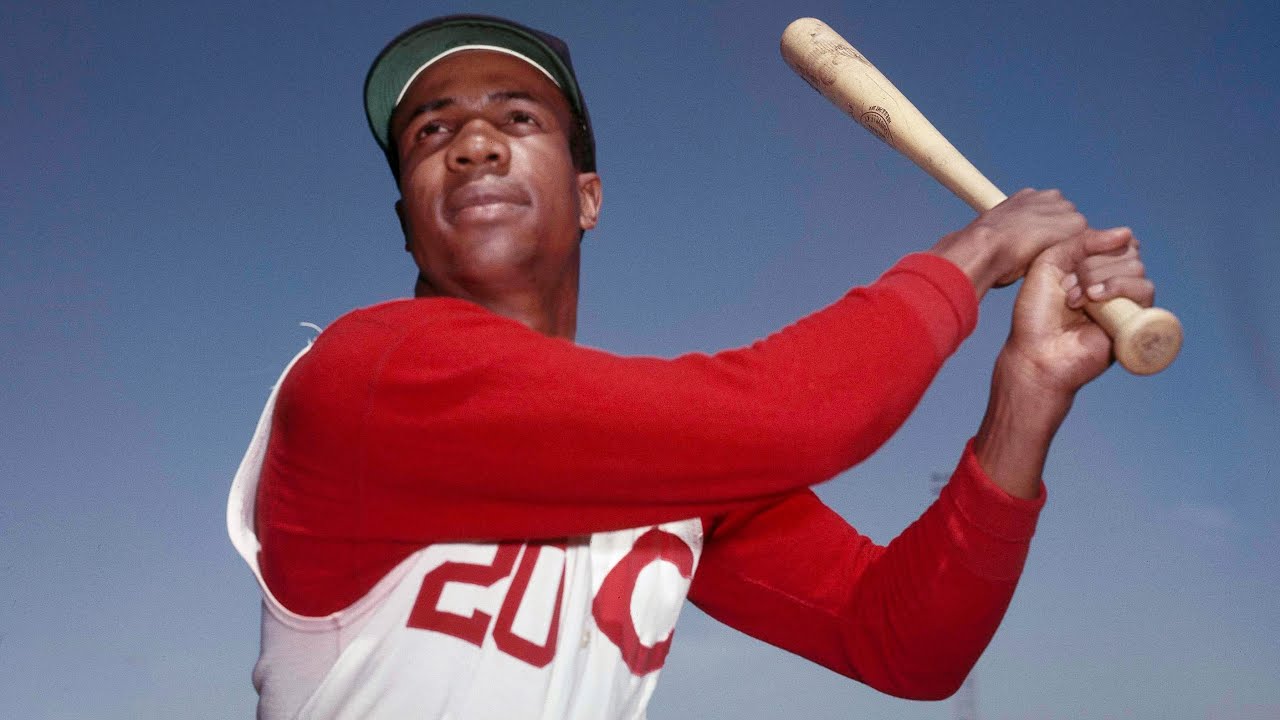
Frank Robinson (LF) – MVP
.323 AVG / .404 OBP / .611 SLG
37 HR, 124 RBI, 117 R, 22 SB
6.8 WAR (Baseball-Reference) Robinson was a force in every facet: he crushed lefties and righties, ran the bases with ferocity, and played Gold Glove-caliber defense. He also hit .398 with runners in scoring position.
Frank Robinson homers in the 1961 World Series
Vada Pinson (CF) – The Silent Superstar
.343 AVG / 16 HR / 87 RBI / 23 SB
34 doubles, 208 hits (would’ve led the league with full qualification) Though he fell short of the plate appearance minimum due to injury, Pinson was arguably the best pure hitter on the team. His graceful defense and gap power made him a two-way star.
Gordy Coleman (1B)
.287 AVG / 26 HR / 87 RBI A surprise contributor after hitting just .188 in a 1959 cup of coffee, Coleman was a consistent cleanup hitter behind Robinson.
Gene Freese (3B)
.277 AVG / 26 HR / 87 RBI A fiery presence at the hot corner, Freese hit .311 in the second half and was vital in clutch spots.
Wally Post (RF)
.294 AVG / 22 HR / 58 RBI in 119 games Returned to Cincinnati as a fan favorite and provided veteran leadership and power.
Ed Bailey (C) & Jerry Lynch (OF, PH)
Bailey: 16 HR, 46 RBI
Lynch: 13 HR, .315 AVG, and 25 RBI off the bench Lynch had one of the greatest pinch-hitting seasons in baseball history — 19 pinch hits and five pinch-hit home runs.
Pitching: From Weakness to Weapon
Joey Jay – The Breakout Ace
21–10, 3.53 ERA, 247 IP, 122 K A former No. 1 overall bonus baby with Milwaukee, Jay finally realized his potential with Hutchinson’s guidance. He posted 16 complete games and shut down teams late in the year.
Jim O’Toole – The Bulldog Lefty
19–9, 3.10 ERA, 252 IP, 12 CG A 24-year-old with command and poise beyond his years. He finished 3rd in the NL in ERA.
Bob Purkey – The Control Artist
16–12, 3.73 ERA, 11 CG, 263 IP Known for his knuckle-curve and pitch-to-contact approach, Purkey was durable and dependable.
Bill Henry (Closer)
16 saves, 2.19 ERA in 58 appearances Henry was the bullpen anchor and rarely made mistakes late.
Jim Brosnan (Reliever & Author)
10 saves, 3.04 ERA Brosnan was also an intellectual and published
The Long Season, a book that offered fans a deep look inside the game.
Key Stretch: July to August Surge
From July 1 to August 15, the Reds went 30–14, including:
A 4-game sweep of the Dodgers in LA.
A walk-off series win against San Francisco at Crosley Field.
Joey Jay won 10 of his last 12 starts.
Robinson and Pinson combined for 14 HRs and 40 RBIs in July alone.
This surge created separation from the Dodgers and Giants, who faded late.
Clinching the Pennant
On September 26, in front of a roaring
Crosley Field
crowd of 24,000, the Reds beat the Cubs 6–3 to secure the National League crown. Jay pitched into the eighth and Robinson homered in a fitting moment of symmetry. Cincinnati finished 93–61 — a 26-win improvement from 1960.
It was their first pennant in 21 years and sent the Queen City into celebration. Hutchinson was carried off the field by his players, and Cincinnati fans stormed downtown in spontaneous parades.
1961 World Series: Yankees Dominate, But Reds Don’t Crumble
The Reds faced the 109-win New York Yankees, the most powerful lineup of the era:
Roger Maris: 61 HR, 142 RBI
Mickey Mantle: 54 HR, .317 AVG
Whitey Ford: 25–4, 3.21 ERA
Series Recap:
Game 1: Yankees 2, Reds 0 (Ford tosses a 2-hitter)
Game 2: Yankees 3, Reds 2 (late rally again stuns Cincy)
Game 5: Yankees 13, Reds 5 (offensive explosion ends the Series)
The Reds played competitively but couldn’t match New York’s firepower. Still, they earned national respect and began reshaping the narrative around the franchise.
Legacy and Impact
Fred Hutchinson’s Heroic Battle
Hutchinson led the Reds to another strong season in 1962 (98 wins) but was tragically diagnosed with terminal cancer in 1963. He managed his last game in August 1964 and passed away in November.
His courage inspired teammates and fans. The Fred Hutchinson Cancer Research Center was founded in his honor in Seattle.
Foundation for the Future
While the Big Red Machine was still a decade away, 1961 set the tone:
It reestablished Cincinnati as a baseball city.
It launched Frank Robinson into superstardom (he would win the Triple Crown and MVP in 1966 with the Orioles).
It was the spiritual turning point for a franchise that would dominate the 1970s.
Final Numbers
Record: 93–61
Finish: 1st in NL, lost World Series to Yankees (4–1)
Team WAR (BRef): 43.5
Team HRs: 190
Team ERA: 3.77 (3rd in NL)
Conclusion: The Heart of a Champion
The 1961 Cincinnati Reds may not have won the World Series, but they did something perhaps more meaningful: they reawakened a city, shocked the baseball world, and created a new standard for Reds baseball. They were gritty, unselfish, and relentless — true ragamuffins turned champions.
Up To $1500 in Bonus Bets Paid Back if your First Bet Does Not Win
T&Cs apply
4.5/5
Gambling problem? Call 1-800-GAMBLER or 1-800-MY-RESET (Available in the US) 877-8-HOPENY or text HOPENY (467369) (NY) 1-800-327-5050 (MA), 1-800-BETS-OFF (IA), 1-800-981-0023 (PR). 21+ only. Please Gamble Responsibly. See BetMGM.com for Terms. First Bet Offer for new customers only (if applicable). Subject to eligibility requirements. Bonus bets are non-withdrawable. In partnership with Kansas Crossing Casino and Hotel. Promotional offers not available in Mississippi, Massachusetts, New York, Ontario, or Puerto Rico.
New DraftKings Customers: Spend $5+ Get $150 in Bonuses
T&Cs apply
4.5/5
GAMBLING PROBLEM? CALL 1-800-GAMBLER or 1-800-MY-RESET, (800) 327-5050 or visit gamblinghelplinema.org (MA). Please Gamble Responsibly. 888-789-7777/visit ccpg.org (CT), or visit www.mdgamblinghelp.org (MD), 1-800-981-0023 (PR). 21+ and present in most states. (18+ DC/NH/PR/WY). Void in CAN. Eligibility restrictions apply. On behalf of Boot Hill Casino (KS). Pass-thru of per wager tax may apply in IL. 1 per new DraftKings customer. $5+ first-time bet req. Max. $150 issued as non-withdrawable Bonus Bets. Stake removed from payout. Reward issued as $50 in Bonus Bets every 7 days via click-to-claim for 14 days. Bonus Bets and click-to-claims expire 7 days (168hrs) after issuance. Terms: sportsbook.draftkings.com/promos. Ends 10/11/26 at 11:59 PM ET. Sponsored by DK.
Must be 21+. GAMBLING PROBLEM? CALL 1-800-GAMBLER OR CALL 1-800-MY-RESET, www.mdgamblinghelp.org (MD), (800)-327-5050 or gamblinghelplinema.org (MA), Call (877)8-HOPENY or text HOPENY (467369) (NY), (888) 789-7777 or ccpg.org (CT), morethanagame.nc.gov (NC), 1800gambler.net (WV)
Bet $1 and get double the winnings up to $25 for your next 10 bets
T&Cs apply
4.4/5
21+ New users only. Must register using eligible promo code. First bet after registration must qualify. Max. Bonus Bet: $1,000. Bonus Bet expires 14 days after receipt. Void where prohibited. See Caesars.com/promos for full terms. Gambling Problem? 1-800-GAMBLER (1-800-426-2537)
21+ and present in OH. Gambling Problem? Call 1-800-GAMBLER.
This site is using
Cloudflare
and adheres to the
Google Safe Browsing Program. We adapted
Google's Privacy Guidelines
to keep your data safe at all times.
Close
Ready to Win Big? Join the Elite with Our Sports Betting Deals!
FanDuel Promo
New Users – Get $250 in Bonus Bets when you wager $5 for 5 days
Up To $1500 in Bonus Bets Paid Back if your First Bet Does Not Win
Best Slots
T&Cs and 21+ apply
Gambling problem? Call 1-800-GAMBLER or 1-800-MY-RESET (Available in the US) 877-8-HOPENY or text HOPENY (467369) (NY) 1-800-327-5050 (MA), 1-800-BETS-OFF (IA), 1-800-981-0023 (PR). 21+ only. Please Gamble Responsibly. See BetMGM.com for Terms. First Bet Offer for new customers only (if applicable). Subject to eligibility requirements. Bonus bets are non-withdrawable. In partnership with Kansas Crossing Casino and Hotel. Promotional offers not available in Mississippi, Massachusetts, New York, Ontario, or Puerto Rico.
Code:
Open BetMGM
Get Bonus
DraftKings Promo
New DraftKings Customers: Spend $5+ Get $150 in Bonuses
Newcomer
T&Cs and 21+ apply
GAMBLING PROBLEM? CALL 1-800-GAMBLER or 1-800-MY-RESET, (800) 327-5050 or visit gamblinghelplinema.org (MA). Please Gamble Responsibly. 888-789-7777/visit ccpg.org (CT), or visit www.mdgamblinghelp.org (MD), 1-800-981-0023 (PR). 21+ and present in most states. (18+ DC/NH/PR/WY). Void in CAN. Eligibility restrictions apply. On behalf of Boot Hill Casino (KS). Pass-thru of per wager tax may apply in IL. 1 per new DraftKings customer. $5+ first-time bet req. Max. $150 issued as non-withdrawable Bonus Bets. Stake removed from payout. Reward issued as $50 in Bonus Bets every 7 days via click-to-claim for 14 days. Bonus Bets and click-to-claims expire 7 days (168hrs) after issuance. Terms: sportsbook.draftkings.com/promos. Ends 10/11/26 at 11:59 PM ET. Sponsored by DK.
Code:
Open DraftKings
Get Bonus
Find out what the legends have to say about sports this week....