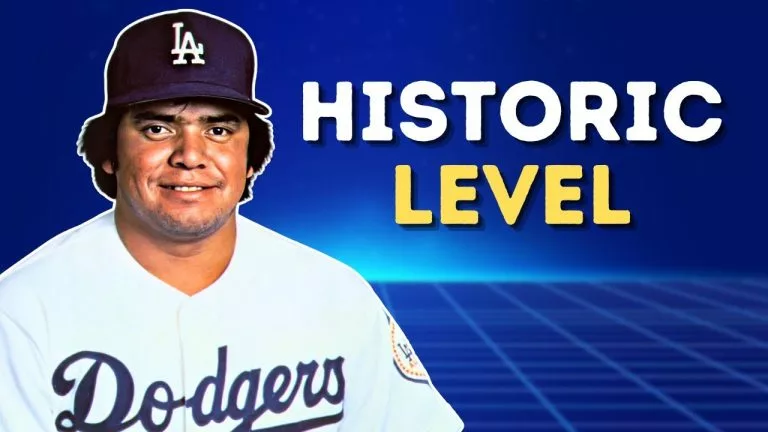
In the annals of baseball history, few rookie seasons have matched the sheer magic and cultural resonance of Fernando Valenzuela’s 1981 campaign. At just 20 years old, the stocky left-hander from Etchohuaquila, Sonora, Mexico didn’t just dominate opposing hitters—he ignited a cultural movement that crossed borders, transformed the
Los Angeles Dodgers, and reshaped the way Major League Baseball engaged with Latino fans.
A Sudden Opportunity
Valenzuela entered the 1981 season as a promising young pitcher buried in the Dodgers’ rotation depth chart. His break came when veteran starter Jerry Reuss suffered a calf injury before Opening Day. Manager Tommy Lasorda handed the ball to Valenzuela, and from that moment, baseball’s spotlight shifted.
Opening Day—April 9, 1981—against the defending NL West champion Houston Astros, was the beginning of the legend. Valenzuela tossed a complete-game shutout, scattering five hits, striking out five, and walking none. More importantly, his baffling screwball, paired with pinpoint control and a mound presence well beyond his years, instantly captivated fans and media alike.
A Start for the Ages
Fernando’s start to the season was unprecedented. He won his first eight decisions, posting a microscopic 0.50 ERA over 72 innings. In that stretch, he threw five shutouts,
pitched nine complete games, and looked nearly unhittable. He wasn’t just beating teams—he was dominating them in an era when offense was plentiful and hitters feared his late-breaking screwball.
By season’s end (which was shortened due to a midseason players’ strike), Valenzuela’s numbers were staggering for any pitcher, let alone a rookie:
Record:
13–7
ERA:
2.48 (led NL)
Innings:
192.1 (led NL)
Complete Games:
11 (led NL)
Shutouts:
8 (led MLB)
Strikeouts:
180 (led NL)
His combination of durability, dominance, and composure earned him both the National League Cy Young Award and Rookie of the Year honors—the only pitcher in MLB history to win both in the same season.
Postseason Heroics
The Dodgers entered the 1981 postseason facing the Houston Astros in the NL Division Series. Valenzuela started Game 4 in a must-win situation and delivered a complete-game victory, forcing a deciding Game 5 that the Dodgers also won.
In the NLCS against the Montreal Expos, Valenzuela pitched Game 3, going 8.2 innings and allowing just one run in a tense, low-scoring series.
The
World Series
against the New York Yankees was the stage where Fernando further cemented his legacy. In Game 3, with the Dodgers down 0–2 in the series, Valenzuela gave up five runs in the first three innings but refused to leave the mound. He battled for a complete-game 5–4 victory, turning the tide of the series. Los Angeles won four straight to claim the championship, with Fernando’s performance embodying the team’s resilience.
The Birth of “Fernandomania”
While the stats tell the baseball story, the phenomenon surrounding Valenzuela told a much larger one. The Dodgers had long drawn fans from the Mexican-American community, but Fernando’s rise transformed that relationship into something deeper.
Attendance Booms:
Every time Valenzuela pitched, Dodger Stadium’s attendance surged, often exceeding capacity. Road games were no different—stadiums filled with Latino fans, many waving Mexican flags and chanting in Spanish.
Cultural Pride:
For many Mexican-Americans and Latino fans, Valenzuela represented more than just a great pitcher—he was a symbol of identity, representation, and success in a sport that had often overlooked their contributions.
Merchandise & Media Explosion:
“Fernandomania” swept across Southern California and beyond. T-shirts, buttons, and posters sold in record numbers. Spanish-language radio broadcasts drew unprecedented ratings. Sportswriters and broadcasters across the country began giving more attention to Latino perspectives.
Bridging Generations:
Valenzuela’s popularity transcended age and background. Older fans admired his work ethic and humble demeanor, while younger fans saw in him a hero who looked like them, spoke their language, and succeeded at the highest level.
The INSANE Prime of Fernando Valenzuela
Lasting Cultural Impact
Fernando Valenzuela’s 1981 season had ripple effects that extended far beyond the box scores.
Latino Representation in MLB
– His success encouraged greater scouting and signing of players from Mexico and Latin America. Teams realized that the Latino fanbase was not only large but deeply passionate.
Economic Impact on the Dodgers
– The surge in attendance and merchandising revenue during Fernandomania was substantial, proving that cultural connection could be as important to a franchise’s bottom line as winning.
Enduring Legacy
– Even after his rookie year, Valenzuela remained a beloved figure in Los Angeles for decades. In 2023, the Dodgers retired his No. 34, an honor that symbolized not only his on-field excellence but his societal impact.
Changing Perceptions
– At a time when Mexican-Americans often faced cultural marginalization, Valenzuela’s dominance on the mound gave them a celebrated public figure, challenging stereotypes and fostering community pride.
1981 World Series Game 3 (Yankees vs. Dodgers, Fernando Valenzuela throws complete game)
Conclusion
Fernando Valenzuela’s 1981 season wasn’t just about a rookie phenom with a devastating screwball—it was about the intersection of sport, culture, and identity. His dominance helped deliver a World Series title to Los Angeles, but his greater achievement was giving voice and visibility to millions who saw in him a reflection of themselves.
More than four decades later,
Fernandomania
remains one of baseball’s most remarkable phenomena—proof that a single player, in one unforgettable season, can transcend the game and leave a legacy that lives far beyond the field.
Up To $1500 in Bonus Bets Paid Back if your First Bet Does Not Win
T&Cs apply
4.5/5
Gambling problem? Call 1-800-GAMBLER or 1-800-MY-RESET (Available in the US) 877-8-HOPENY or text HOPENY (467369) (NY) 1-800-327-5050 (MA), 1-800-BETS-OFF (IA), 1-800-981-0023 (PR). 21+ only. Please Gamble Responsibly. See BetMGM.com for Terms. First Bet Offer for new customers only (if applicable). Subject to eligibility requirements. Bonus bets are non-withdrawable. In partnership with Kansas Crossing Casino and Hotel. Promotional offers not available in Mississippi, Massachusetts, New York, Ontario, or Puerto Rico.
New DraftKings Customers: Spend $5+ Get $150 in Bonuses
T&Cs apply
4.5/5
GAMBLING PROBLEM? CALL 1-800-GAMBLER or 1-800-MY-RESET, (800) 327-5050 or visit gamblinghelplinema.org (MA). Please Gamble Responsibly. 888-789-7777/visit ccpg.org (CT), or visit www.mdgamblinghelp.org (MD), 1-800-981-0023 (PR). 21+ and present in most states. (18+ DC/NH/PR/WY). Void in CAN. Eligibility restrictions apply. On behalf of Boot Hill Casino (KS). Pass-thru of per wager tax may apply in IL. 1 per new DraftKings customer. $5+ first-time bet req. Max. $150 issued as non-withdrawable Bonus Bets. Stake removed from payout. Reward issued as $50 in Bonus Bets every 7 days via click-to-claim for 14 days. Bonus Bets and click-to-claims expire 7 days (168hrs) after issuance. Terms: sportsbook.draftkings.com/promos. Ends 10/11/26 at 11:59 PM ET. Sponsored by DK.
Must be 21+. GAMBLING PROBLEM? CALL 1-800-GAMBLER OR CALL 1-800-MY-RESET, www.mdgamblinghelp.org (MD), (800)-327-5050 or gamblinghelplinema.org (MA), Call (877)8-HOPENY or text HOPENY (467369) (NY), (888) 789-7777 or ccpg.org (CT), morethanagame.nc.gov (NC), 1800gambler.net (WV)
Bet $1 and get double the winnings up to $25 for your next 10 bets
T&Cs apply
4.4/5
21+ New users only. Must register using eligible promo code. First bet after registration must qualify. Max. Bonus Bet: $1,000. Bonus Bet expires 14 days after receipt. Void where prohibited. See Caesars.com/promos for full terms. Gambling Problem? 1-800-GAMBLER (1-800-426-2537)
21+ and present in OH. Gambling Problem? Call 1-800-GAMBLER.
This site is using
Cloudflare
and adheres to the
Google Safe Browsing Program. We adapted
Google's Privacy Guidelines
to keep your data safe at all times.
Close
Ready to Win Big? Join the Elite with Our Sports Betting Deals!
FanDuel Promo
New Users – Get $250 in Bonus Bets when you wager $5 for 5 days
Up To $1500 in Bonus Bets Paid Back if your First Bet Does Not Win
Best Slots
T&Cs and 21+ apply
Gambling problem? Call 1-800-GAMBLER or 1-800-MY-RESET (Available in the US) 877-8-HOPENY or text HOPENY (467369) (NY) 1-800-327-5050 (MA), 1-800-BETS-OFF (IA), 1-800-981-0023 (PR). 21+ only. Please Gamble Responsibly. See BetMGM.com for Terms. First Bet Offer for new customers only (if applicable). Subject to eligibility requirements. Bonus bets are non-withdrawable. In partnership with Kansas Crossing Casino and Hotel. Promotional offers not available in Mississippi, Massachusetts, New York, Ontario, or Puerto Rico.
Code:
Open BetMGM
Get Bonus
DraftKings Promo
New DraftKings Customers: Spend $5+ Get $150 in Bonuses
Newcomer
T&Cs and 21+ apply
GAMBLING PROBLEM? CALL 1-800-GAMBLER or 1-800-MY-RESET, (800) 327-5050 or visit gamblinghelplinema.org (MA). Please Gamble Responsibly. 888-789-7777/visit ccpg.org (CT), or visit www.mdgamblinghelp.org (MD), 1-800-981-0023 (PR). 21+ and present in most states. (18+ DC/NH/PR/WY). Void in CAN. Eligibility restrictions apply. On behalf of Boot Hill Casino (KS). Pass-thru of per wager tax may apply in IL. 1 per new DraftKings customer. $5+ first-time bet req. Max. $150 issued as non-withdrawable Bonus Bets. Stake removed from payout. Reward issued as $50 in Bonus Bets every 7 days via click-to-claim for 14 days. Bonus Bets and click-to-claims expire 7 days (168hrs) after issuance. Terms: sportsbook.draftkings.com/promos. Ends 10/11/26 at 11:59 PM ET. Sponsored by DK.
Code:
Open DraftKings
Get Bonus
Find out what the legends have to say about sports this week....