He won 216 regular-season games, struck out 3,116 batters, produced one of the greatest strikeout-to-walk ratios in baseball history
Curt Schilling is not in the Baseball Hall of Fame, but the reason has almost nothing to do with what he accomplished on a pitcher’s mound.
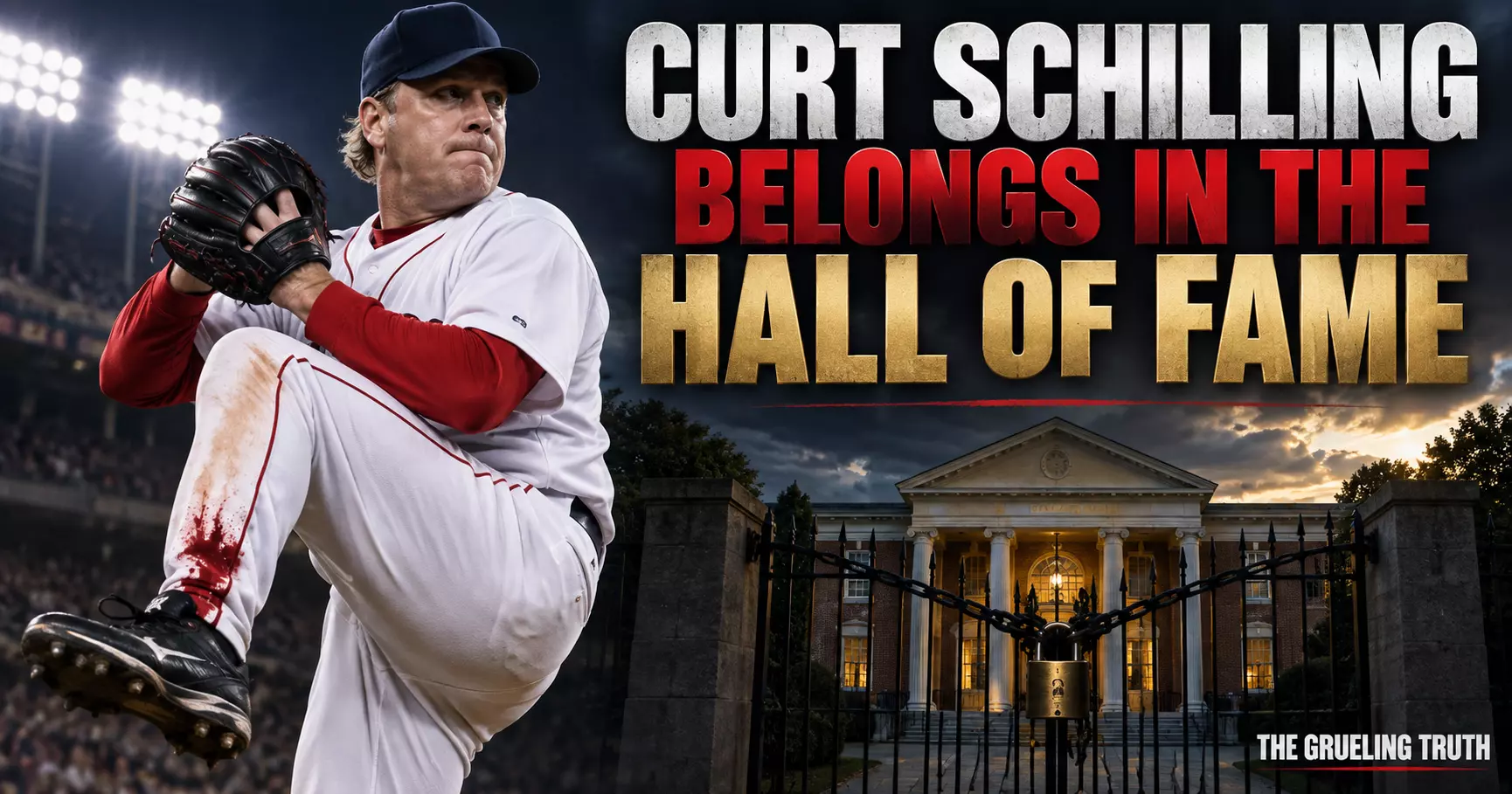
He won 216 regular-season games, struck out 3,116 batters, produced one of the greatest strikeout-to-walk ratios in baseball history, and helped three teams win the World Series. He was even better when the games mattered most, compiling an 11–2 postseason record with a 2.23 ERA.
Those are Hall of Fame numbers. That is a Hall of Fame career. And when Schilling’s
October heroics
are added to his regular-season résumé, his exclusion becomes impossible to defend on baseball grounds.
Schilling remains outside Cooperstown primarily because many voters disliked what he said and how he behaved after his playing career ended. He made inflammatory social-media posts, attacked members of the media and repeatedly inserted himself into divisive political and cultural debates, unfortunately he took the wrong side on the issues that voters love. Some of his comments were indefensible to some, and nobody is required to agree with his political views, but they are his views and as an American he should have a right to voice those views.
But the Baseball Hall of Fame is supposed to preserve the history of baseball. It should not be a popularity contest, a lifetime-achievement award for agreeable personalities or a political approval process administered by sportswriters.
Curt Schilling was one of the greatest pitchers of his generation. Keeping him out because voters do not like him is a joke.
Why Curt Schilling Is Really Not in the Hall of Fame
Schilling’s candidacy did not fail because voters concluded that his performance fell below the Hall of Fame standard. His voting history makes that obvious.
In 2021, his ninth year on the ballot, Schilling received 285 of 401 votes, or 71.1 percent. He finished only 16 votes short of the 75 percent required for induction and received more support than any other candidate in an election in which nobody was selected. Instead of completing the typical final-year surge enjoyed by many candidates, his support collapsed to 58.6 percent in 2022. The official Hall of Fame results show that he lost 54 votes between those two elections.
A pitcher does not suddenly become less qualified after being retired for another year. Schilling did not lose any victories, strikeouts or World Series championships between the 2021 and 2022 elections. His career ERA did not rise. His postseason record did not change.
The voters changed their judgment because of everything surrounding the player—not because of the player’s performance.
Schilling had spent years alienating the people holding the ballots. ESPN suspended and eventually fired him following controversial social-media posts. He made offensive remarks about Muslims and transgender people, promoted a social-media image interpreted as supporting violence against journalists and regularly attacked the press. He also became an outspoken supporter of Donald Trump, adding partisan politics to an already combative public image.
Those facts explain why Schilling became deeply unpopular in some circles (Liberal). They do not erase what he did during his 20 major-league seasons.
The Character Clause Has Become a Convenient Excuse
Hall of Fame voters are instructed to consider a player’s record, ability, integrity, sportsmanship, character and contributions to his teams. That language gives voters considerable freedom, but it has never been applied consistently.
If the character clause were treated as an absolute moral standard, Cooperstown would contain far fewer plaques. The Hall includes players and executives associated with racism, cheating, alcohol abuse, violence, amphetamine use and other serious misconduct. Baseball history is filled with complicated people who accomplished extraordinary things while possessing significant personal flaws.
Schilling’s critics can condemn his public remarks. The problem arises when voters transform personal disapproval into a reason to rewrite baseball history.
There is also an important distinction between conduct that corrupted competition and conduct that offended people away from the field. Performance-enhancing drugs, game fixing and illegal gambling on baseball strike at the credibility of the sport itself. Schilling was never accused of using steroids, fixing games or manipulating the results of contests. His controversies occurred primarily after his career and had nothing to do with the legitimacy of his statistics. Hell, Pete Rose since his death will probably be voted in at some point and he admitted to
sleeping with underage girls! Plus, he bet on Baseball games he played in. Pete Rose was an actual piece of shot, Schilling is not, he just has the wrong opinions to a voter core that is very liberal.
A voter can dislike Schilling’s politics, reject his statements and still recognize that he belongs in the Baseball Hall of Fame. A ballot should not be treated as a reward for sharing the voter’s worldview. Everybody wants to hate each other for their opinions today and this is a case where a legendary Pitcher is being denied his rightful place because of things he said against Trans people and Muslims. Once again things he said and not things he did. The LGBTQ posse is like a mob; they will take you out if you don’t agree with their insane rhetoric.
The Regular-Season Numbers Are More Than Good Enough
Schilling finished his career with a 216–146 record, a 3.46 ERA and 3,116 strikeouts. According to the Hall of Fame’s own summary of his career, he was one of only five pitchers at the time with at least 3,000 strikeouts and fewer than 1,000 walks. He also finished with a 4.38 strikeout-to-walk ratio, an extraordinary number for a pitcher who worked primarily during an offense-heavy era(Steroids). The Hall’s official profile documents his statistical accomplishments.
The 216 victories are sometimes used against him, but relying on that total ignores how pitching changed during his career. Schilling did not reach the traditional 300-win milestone, but neither did Pedro Martinez, John Smoltz or Roy Halladay. All three were correctly elected to Cooperstown.
Schilling also accumulated approximately 80 wins above replacement, depending on the calculation and database used. That places him comfortably within Hall of Fame territory and ahead of numerous pitchers who already have plaques.
His 127 career ERA+ means his run prevention was 27 percent better than the league average after adjusting for ballparks and offensive environments. That matters because Schilling pitched through the heart of the high-scoring era of the 1990s and early 2000s. His raw 3.46 ERA must be evaluated within that context.
He also delivered elite durability at his peak. Schilling exceeded 250 innings four times, reached 300 strikeouts in three seasons and led his league in complete games four times. Only Randy Johnson and Nolan Ryan recorded more 300-strikeout seasons.
Schilling finished second in Cy Young Award voting three times—1997, 2001 and 2004. He was not merely good for a long time. At his best, he was repeatedly judged to be one of the two finest pitchers in his league.
Comparing Schilling With Tom Glavine Exposes the Problem
Tom Glavine was elected to the Hall of Fame on the first ballot with 91.9 percent of the vote. He deserved his induction. The point is not to diminish Glavine but to demonstrate how easily Schilling meets the same standard.
Glavine finished with 305 victories, giving traditional voters the milestone they value. Schilling, however, had the superior ERA+, dramatically more strikeouts and a historically better strikeout-to-walk ratio. Advanced measurements also credit Schilling with comparable or greater overall value.
Glavine’s 305 wins made his candidacy simple. Schilling’s 216 wins required voters to look beyond one traditional statistic and examine how effectively he actually pitched.
When they do, the conclusion is unmistakable: Schilling was a Hall of Fame pitcher.
He Was One of the Greatest Postseason Pitchers Ever
Even if Schilling’s regular-season case were borderline—and it is stronger than borderline—his postseason record should settle the argument.
Schilling went 11–2 with a 2.23 ERA in 19 postseason starts. He struck out 120 batters while issuing only 25 walks, completed four games and threw two shutouts. His .846 postseason winning percentage remains the best for a pitcher with at least 10 decisions.
The wins were not accumulated through easy assignments or meaningless innings. Schilling repeatedly faced championship-level opponents in the most important games imaginable.
Research published by the Society for American Baseball Research noted that Schilling started five games in which his team faced elimination. His teams won all five, and he posted a 1.37 ERA. In three starts in which his team could clinch a series, his teams went 3–0 while he recorded a 1.16 ERA. SABR’s Schilling biography details his remarkable record in those situations.
Some players build impressive career totals without producing a defining October moment. Schilling created enough of them for several careers.
His 2001 Postseason Was Historically Great
The Arizona Diamondbacks entered the 2001 World Series against a New York Yankees dynasty seeking its fourth consecutive championship. Schilling and Randy Johnson carried Arizona through the postseason and helped deliver one of the greatest World Series upsets ever.
Schilling went 4–0 with a 1.12 ERA during that postseason. He pitched 48⅓ innings, threw three complete games and struck out 56 batters—a single-postseason record that still stands.
In the World Series, he started Games 1, 4 and 7. He allowed only six earned runs across 21⅓ innings against the defending champions. Schilling and Johnson were named co-Most Valuable Players after Arizona won the series in seven games.
That postseason alone belongs in baseball history. Combined with the rest of his career, it should have made his Hall of Fame selection inevitable.
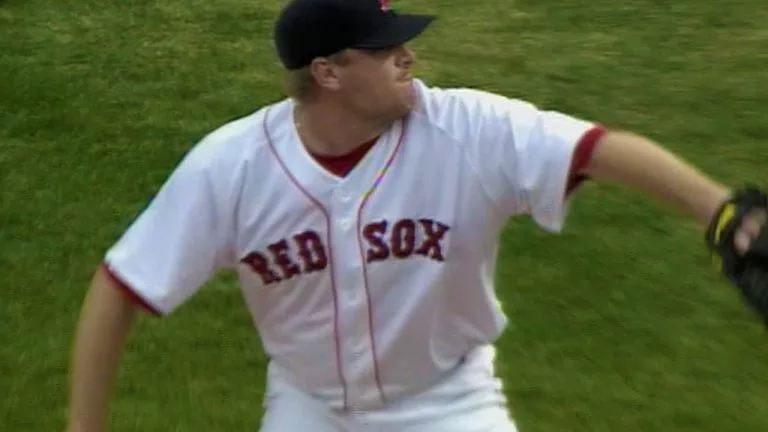
He suffered a torn tendon sheath in his right ankle during Boston’s 2004 postseason run and was ineffective in Game 1 of the American League Championship Series. With the Red Sox attempting to complete an unprecedented comeback from a three-games-to-none deficit against the Yankees, doctors temporarily stabilized the injured tendon so he could pitch Game 6.
Blood became visible through Schilling’s sock as he worked. He nevertheless held New York to one run on four hits over seven innings, helping Boston force Game 7. SABR’s account of the Bloody Sock Game explains both the medical uncertainty and the magnitude of the performance.
Boston won Game 7, completed the first comeback from a 3–0 series deficit in major-league history and then swept St. Louis to end its 86-year championship drought. Schilling pitched six innings of one-run baseball in Game 2 of the World Series after undergoing the procedure again.
He later helped Boston win another championship in 2007, earning one victory in each of the three postseason rounds.
Three World Series championships. A World Series co-MVP award. An NLCS MVP award. An 11–2 postseason record. A 2.23 October ERA. One of the most courageous and recognizable performances in the history of the sport.
What more could a pitcher possibly be expected to do?
2004 ALCS Gm6: Schilling’s epic performance through adversity
His Fall From 71.1 Percent Proves This Was Personal
The strongest evidence that Schilling’s exclusion was personal is his own voting trajectory.
Candidates often gain support as voters reconsider their careers and ballot congestion clears. Schilling followed that pattern for most of his candidacy, rising from 38.8 percent in his first year to 71.1 percent in his ninth. He appeared positioned to cross the threshold in his final opportunity.
Instead, following additional controversy and his request to be removed from the writers’ ballot, Schilling fell to 58.6 percent.
His demand to be removed was antagonistic and counterproductive. The Hall rejected that request, and the BBWAA argued that he should remain because he met the established eligibility requirements. But even an attack on the voters does not alter a candidate’s playing record. Especially when those writers needed to be attacked for this.
A Hall of Fame voter’s responsibility should not depend on whether the candidate respects the voter. Schilling’s insults may have been unnecessary, but withholding a vote in response only confirms his complaint that personal feelings had overtaken an evaluation of his career. In the end the voters proved what Schilling said about them was true.
After exhausting his 10 years on the writers’ ballot, Schilling received seven of 16 votes from the Contemporary Baseball Era Committee in December 2022. He needed 12 for election. Official Hall of Fame results confirm that he received 43.8 percent of that committee’s vote.
Cooperstown Does Not Have to Celebrate His Opinions
Electing Schilling would not require the Hall of Fame to approve of everything he has ever said.
His plaque would describe a pitcher who won 216 games, struck out 3,116 batters, dominated in October and helped produce championship moments that remain central to the histories of the Phillies, Diamondbacks and Red Sox. It would not endorse his social-media account, his political affiliations or his disputes with journalists.
That is the crucial point the voters have repeatedly failed to understand—or have chosen to ignore.
The Hall of Fame is a baseball museum. Its plaques document the people who shaped the game. Schilling undeniably shaped it. The 1993 Phillies, the 2001 Diamondbacks and the 2004 Red Sox cannot be fully discussed without him.
Voters are entitled to criticize his remarks. They are entitled to refuse to watch his programs, follow his accounts or support his political opinions. What they should not do is use a Hall of Fame ballot as a weapon for personal or political retaliation.
Best of Curt Schilling
Curt Schilling Belongs in Cooperstown
Schilling was not Pedro Martinez, whose peak may have been the greatest ever produced by a starting pitcher. He was not Randy Johnson, who combined overwhelming power with exceptional longevity. A player does not have to be the greatest pitcher of his generation to qualify for Cooperstown.
Schilling was still one of that generation’s defining pitchers.
He had the career value. He had the peak seasons. He had the strikeouts, command, durability and adjusted run prevention. Most importantly, he performed his best when the pressure was greatest.
If Schilling had retired from public life after throwing his final pitch, he would almost certainly have a plaque today. That alone reveals the absurdity of his exclusion. His Hall of Fame case was apparently strong enough until voters became angry with the man making it.
Curt Schilling may be argumentative. He may be offensive to some, but many Americans share his world view. He may be one of the least popular candidates ever presented to the voters, but that popularity means the leftist writers not the general public. None of that changes the baseball record.
A Hall of Fame without one of the greatest postseason pitchers in history is not punishing Curt Schilling as much as it is diminishing its own credibility.
Curt Schilling belongs in Cooperstown. The fact that he is still on the outside is not a baseball decision. It is personal—and it is a joke. In closing, if you asked me to pick a Pitcher to win me a game in Game 7 on the road in the World Series Curt Schilling would be at the top of my list. The History of the game, especially in the last 50 years cannot be written without Curt Schilling.
New Users – Get $350 in Bonus Bets when you wager $5 for 7 days
T&Cs apply
4.6/5
Gambling Problem? Call 1-800-GAMBLER or 1-800-MY-RESET. Call 1-888-789-7777 or visit ccpgg.org/chat (CT). Hope is here. GamblingHelpLineMA.org or call (800) 327-5050 for 24/7 support (MA). Visit www.mdgamblinghelp.org (MD). Call 1-877-8HOPE-NY or text HOPENY (NY). 21+ (18+ DC, WY) and present in select states (for KS, in affiliation with Kansas Star Casino). Find online real money wagering only. Min $5 wager required for 7 consecutive days. $5 free play credit. Bonus issued as non-withdrawable bonus with cash withdrawable bonus with cash withdrawable. Bonus bets which expire 7 days after receipt. Restrictions apply. See terms at sportsbook.fanduel.com. Call 1-877-770-7867 (LA).
Up To $1500 in Bonus Bets Paid Back if your First Bet Does Not Win
T&Cs apply
4.5/5
Gambling problem? Call 1-800-GAMBLER or 1-800-MY-RESET (Available in the US) 877-8-HOPENY or text HOPENY (467369) (NY) 1-800-327-5050 (MA), 1-800-BETS-OFF (IA), 1-800-981-0023 (PR). 21+ only. Please Gamble Responsibly. See BetMGM.com for Terms. First Bet Offer for new customers only (if applicable). Subject to eligibility requirements. Bonus bets are non-withdrawable. In partnership with Kansas Crossing Casino and Hotel. Promotional offers not available in Mississippi, Massachusetts, New York, Ontario, or Puerto Rico.
New DraftKings Customers: Bet $5, Get $200 + 3 Months of NBA League Pass!
T&Cs apply
4.5/5
GAMBLING PROBLEM? CALL 1-800-GAMBLER or 1-800-MY-RESET, (800) 327-5050 or visit gamblinghelplinema.org (MA). Please Gamble Responsibly. 888-789-7777/visit ccpg.org (CT), or visit www.mdgamblinghelp.org (MD), 1-800-981-0023 (PR). 21+ and present in most states. (18+ DC/NH/PR/WY). Void in CAN. Eligibility restrictions apply. On behalf of Boot Hill Casino (KS). Pass-thru of per wager tax may apply in IL. 1 per new Sportsbook customer. $5+ first-time bet req. Max. $200 issued as non-withdrawable Bonus Bets. Stake removed from payout. Reward issued as $50 in Bonus Bets every 7 days via click-to-claim for 21 days. Bonus Bets and click-to-claims expire 7 days (168hrs) after issuance. Terms: dkng.co/offer. Get 1 promo code to redeem a 3-month NBA League Pass subscription, complimentary of DraftKings. Subscription auto-renews monthly at then-current price (currently $16.99/mo); cancel anytime. Terms, restrictions, and eligibility requirements apply. Redeem League Pass by 12/19/26 at 11:59 PM ET. Addt’l terms: support.watch.nba.com/hc/en-us/articles/9165532876183-League-Pass-Terms-of-Use_. Ends 11/29/26 at 11:59 PM ET. Sponsored by DK.
Must be 21+. GAMBLING PROBLEM? CALL 1-800-GAMBLER OR CALL 1-800-MY-RESET, www.mdgamblinghelp.org (MD), (800)-327-5050 or gamblinghelplinema.org (MA), Call (877)8-HOPENY or text HOPENY (467369) (NY), (888) 789-7777 or ccpg.org (CT), morethanagame.nc.gov (NC), 1800gambler.net (WV)
Bet $1 and get double the winnings up to $25 for your next 10 bets
T&Cs apply
4.4/5
21+ New users only. Must register using eligible promo code. First bet after registration must qualify. Max. Bonus Bet: $1,000. Bonus Bet expires 14 days after receipt. Void where prohibited. See Caesars.com/promos for full terms. Gambling Problem? 1-800-GAMBLER (1-800-426-2537)
21+ and present in OH. Gambling Problem? Call 1-800-GAMBLER.
This site is using
Cloudflare
and adheres to the
Google Safe Browsing Program. We adapted
Google's Privacy Guidelines
to keep your data safe at all times.
Close
Ready to Win Big? Join the Elite with Our Sports Betting Deals!
FanDuel Promo
New Users – Get $350 in Bonus Bets when you wager $5 for 7 days
Our Favorite
T&Cs and 21+ apply
Gambling Problem? Call 1-800-GAMBLER or 1-800-MY-RESET. Call 1-888-789-7777 or visit ccpgg.org/chat (CT). Hope is here. GamblingHelpLineMA.org or call (800) 327-5050 for 24/7 support (MA). Visit www.mdgamblinghelp.org (MD). Call 1-877-8HOPE-NY or text HOPENY (NY). 21+ (18+ DC, WY) and present in select states (for KS, in affiliation with Kansas Star Casino). Find online real money wagering only. Min $5 wager required for 7 consecutive days. $5 free play credit. Bonus issued as non-withdrawable bonus with cash withdrawable bonus with cash withdrawable. Bonus bets which expire 7 days after receipt. Restrictions apply. See terms at sportsbook.fanduel.com. Call 1-877-770-7867 (LA).
Code:
Open FanDuel
Get Bonus
BetMGM Promo
Up To $1500 in Bonus Bets Paid Back if your First Bet Does Not Win
Best Slots
T&Cs and 21+ apply
Gambling problem? Call 1-800-GAMBLER or 1-800-MY-RESET (Available in the US) 877-8-HOPENY or text HOPENY (467369) (NY) 1-800-327-5050 (MA), 1-800-BETS-OFF (IA), 1-800-981-0023 (PR). 21+ only. Please Gamble Responsibly. See BetMGM.com for Terms. First Bet Offer for new customers only (if applicable). Subject to eligibility requirements. Bonus bets are non-withdrawable. In partnership with Kansas Crossing Casino and Hotel. Promotional offers not available in Mississippi, Massachusetts, New York, Ontario, or Puerto Rico.
Code:
Open BetMGM
Get Bonus
DraftKings Promo
New DraftKings Customers: Bet $5, Get $200 + 3 Months of NBA League Pass!
Newcomer
T&Cs and 21+ apply
GAMBLING PROBLEM? CALL 1-800-GAMBLER or 1-800-MY-RESET, (800) 327-5050 or visit gamblinghelplinema.org (MA). Please Gamble Responsibly. 888-789-7777/visit ccpg.org (CT), or visit www.mdgamblinghelp.org (MD), 1-800-981-0023 (PR). 21+ and present in most states. (18+ DC/NH/PR/WY). Void in CAN. Eligibility restrictions apply. On behalf of Boot Hill Casino (KS). Pass-thru of per wager tax may apply in IL. 1 per new Sportsbook customer. $5+ first-time bet req. Max. $200 issued as non-withdrawable Bonus Bets. Stake removed from payout. Reward issued as $50 in Bonus Bets every 7 days via click-to-claim for 21 days. Bonus Bets and click-to-claims expire 7 days (168hrs) after issuance. Terms: dkng.co/offer. Get 1 promo code to redeem a 3-month NBA League Pass subscription, complimentary of DraftKings. Subscription auto-renews monthly at then-current price (currently $16.99/mo); cancel anytime. Terms, restrictions, and eligibility requirements apply. Redeem League Pass by 12/19/26 at 11:59 PM ET. Addt’l terms: support.watch.nba.com/hc/en-us/articles/9165532876183-League-Pass-Terms-of-Use_. Ends 11/29/26 at 11:59 PM ET. Sponsored by DK.
Code:
Open DraftKings
Get Bonus
Find out what the legends have to say about sports this week....
New Users – Get $350 in Bonus Bets when you wager $5 for 7 days
Gambling Problem? Call 1-800-GAMBLER or 1-800-MY-RESET. Call 1-888-789-7777 or visit ccpgg.org/chat (CT). Hope is here. GamblingHelpLineMA.org or call (800) 327-5050 for 24/7 support (MA). Visit www.mdgamblinghelp.org (MD). Call 1-877-8HOPE-NY or text HOPENY (NY). 21+ (18+ DC, WY) and present in select states (for KS, in affiliation with Kansas Star Casino). Find online real money wagering only. Min $5 wager required for 7 consecutive days. $5 free play credit. Bonus issued as non-withdrawable bonus with cash withdrawable bonus with cash withdrawable. Bonus bets which expire 7 days after receipt. Restrictions apply. See terms at sportsbook.fanduel.com. Call 1-877-770-7867 (LA).